By Rozalyn Franklin | RMF Realty Team, LLC | Keller Williams Preferred
As a listing agent, I get calls from people asking to rent homes I have listed for sale. They found the pictures online, recognized the address, and were excited about a ridiculously low monthly rent. These calls are a reminder of how convincing Real Estate Scams can be—and why one phone call matters.
I explain that the home is listed for sale and that the rental advertisement they found is not legitimate. Then I tell them how glad I am they checked before sending money. That simple call helped them avoid handing their hard-earned savings to a stranger.
When you are searching for an affordable home, it is easy to want a great deal to be real. Scammers count on that hope.
Whether you are renting in Columbia, buying in Lexington, or relocating to Elgin or Lugoff, take time to verify who you are dealing with before money changes hands.
How Real Estate Scams Work
Real estate transactions involve deposits, down payments, and substantial closing funds. Criminals try to redirect those payments by impersonating someone you trust.
The FBI describes schemes involving look-alike email addresses, compromised accounts, and access to genuine email conversations. A criminal can learn transaction details and time a fraudulent payment request to appear legitimate. A familiar name or accurate closing information does not prove that an email is safe. Source: FBI
The Fake Rental: A Real House, a Stolen Listing
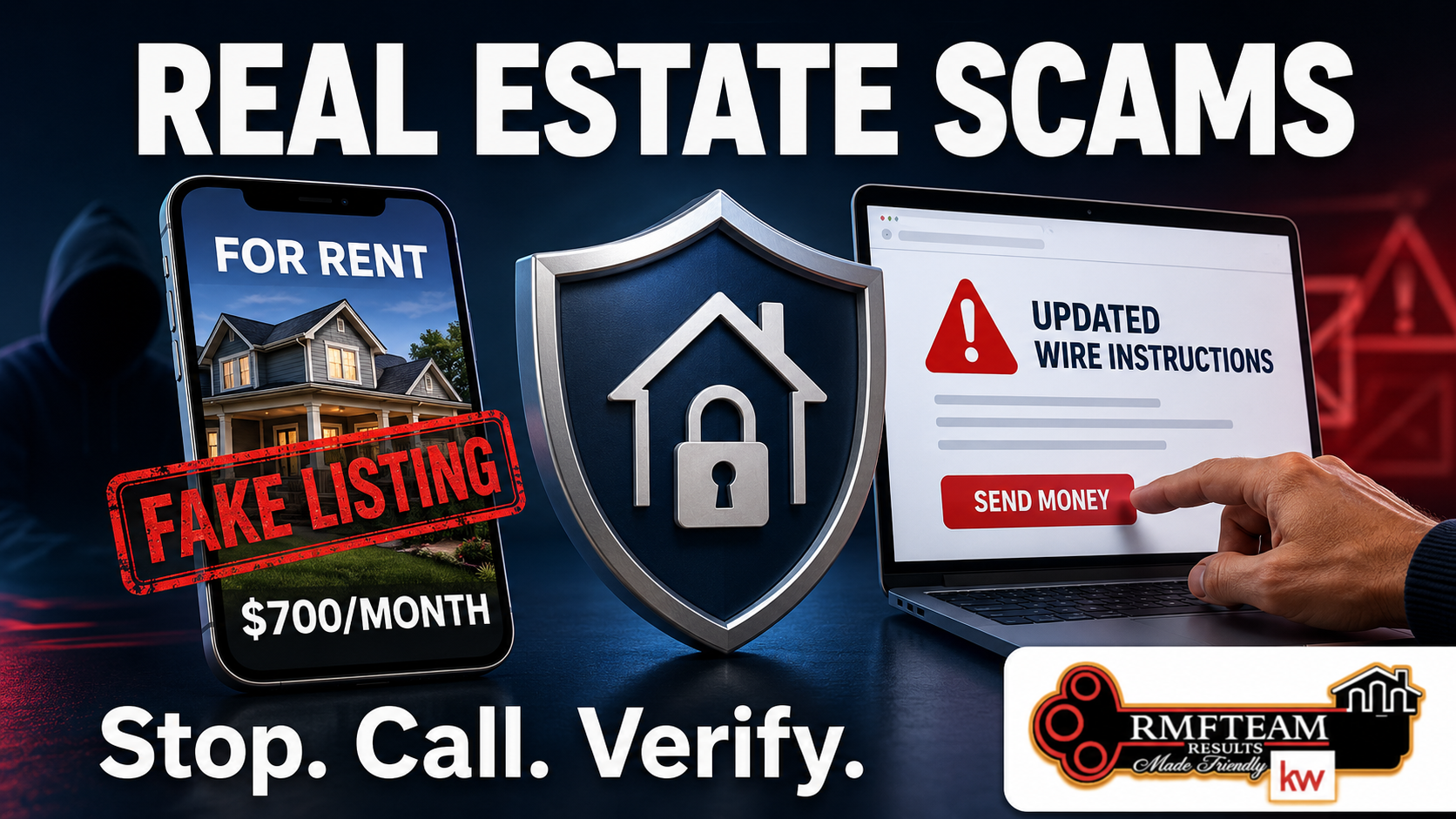
Some scammers invent properties. Others copy photographs and descriptions from genuine listings, replace the contact information, and advertise the home at an unusually low rent. They do not need to hack the original listing to steal its content.
The story often sounds like this: the “owner” is away, cannot show the property, and needs a deposit to hold it.
Watch for these warning signs:
Rent far below comparable homes.
Excuses for avoiding a showing.
Pressure to pay before seeing the property.
Different contact names across advertisements for the same address.
Requests for gift cards, cryptocurrency, or a wire transfer to secure a rental.
Search the address independently and contact the verified listing agent or property manager. See the home yourself, or have someone you trust visit. Verify the person’s authority to rent it before paying or sharing sensitive application information.
Never send money to an unverified person just to see or “hold” a house.
Closing Wire Fraud: The Email That Arrives at the Worst Time
Imagine that you are packing boxes and preparing for closing when an email arrives with “updated” bank instructions.
It appears to come from someone involved in your purchase. The message says the money must move immediately. But the destination account belongs to a criminal.
Treat unexpected payment instructions as a reason to pause. Independently call the closing office using a number established earlier—not a number supplied in the questionable message. Verify payment requests and any changes before acting. Secure your email with multifactor authentication, too. Source: FBI
My advice to buyers is simple: make verification part of your closing plan before the busy final days arrive.
Ask your closing attorney:
How will I receive payment instructions securely?
Which trusted number should I call to verify them?
Who will confirm the receiving bank, account name, routing number, and account number?
How will your office confirm receipt?
An email reply is not an independent verification call.
A Quick Pause Before You Pay
Before sending a rental deposit or closing funds, ask yourself:
Who am I paying? Have I independently verified the person or business?
What have I confirmed? Have I checked the property or payment instructions through a trusted channel?
Why am I rushing? Is someone using a deadline to stop me from asking questions?
Keep this reminder close: Stop. Call. Verify. Then proceed.
What If You Already Sent Money?
Contact your bank or payment provider immediately. For a fraudulent wire, ask your bank to contact the receiving institution and attempt recovery. File a report with the FBI’s Internet Crime Complaint Center. Fast action matters, but recovery is not guaranteed. Source: FBI
For a fake rental advertisement, report the listing to the platform and report the scam through the FTC’s fraud reporting service. Source: FTC
Questions About a Columbia-Area Listing? Reach Out Before You Pay
Protecting your money starts with asking questions. You should feel comfortable slowing down and checking details before making a major housing decision.
If you see a suspicious rental advertisement for one of my listings, contact me before sending a deposit. I would much rather answer that question than hear that someone lost money.
Buying, selling, or relocating in Columbia, Lexington, Blythewood, Elgin, Lugoff, or the surrounding Midlands? Connect with Rozalyn Franklin and the RMF Team to discuss your next move.
Visit BuyThroughRozalyn.com and send an inquiry with “SCAM CHECK” and the property address or listing link. Include your name and preferred contact method so we can follow up. Please do not send bank information, passwords, or Social Security numbers.
RMF Realty Team, LLC | Keller Williams Preferred
Real Estate Made Friendly®
#RealEstateScams #RentalScams #WireFraudPrevention #ColumbiaSCRealEstate #LexingtonSCRealEstate #ElginSC #LugoffSC #SouthCarolinaRealEstate #HomeBuyerTips #RMFRealtyTeam #RealEstateMadeFriendly