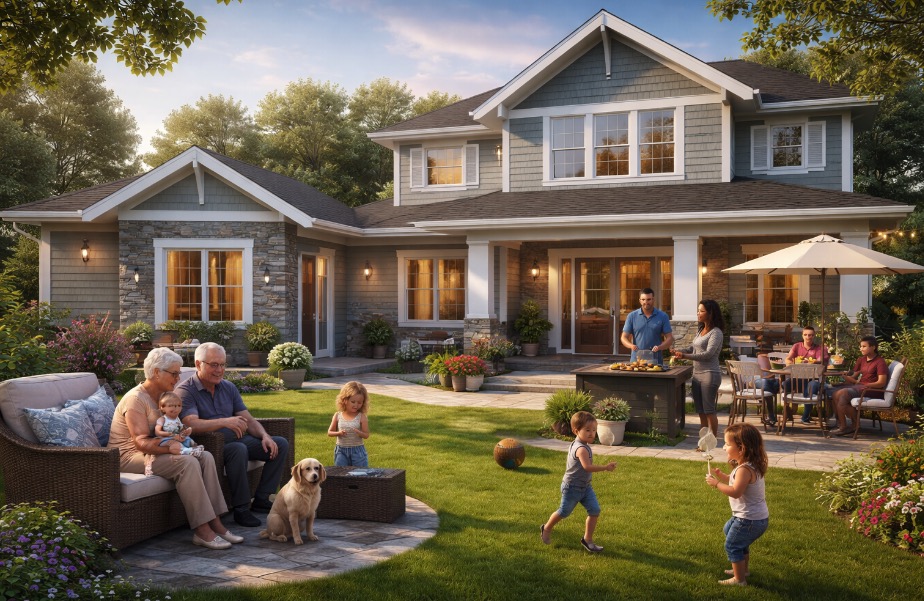
How to Buy with Friends, Family, and Multigenerational Households
If you’ve been thinking about teaming up to buy a home, you’re not alone. This SC Co-Buying Guide is for buyers who want a smart, safe plan to purchase with a friend, sibling, parent, or extended family—especially as co-buying and multigenerational living become more common nationwide and more practical in South Carolina’s evolving market.
Nationwide trends: co-buying + multigenerational living are gaining momentum
Across the U.S., the “traditional” homebuyer household is shifting. Married couples still make up the largest share of buyers (about 61%), but single buyers continue to gain ground—single women ~21% and single men ~9%—showing how many households are adapting to affordability and lifestyle changes. NAR 2025 Profile
Generationally, Millennials remain a major force: Millennials are ~29% of recent buyers (Older Millennials 17%, Younger Millennials 12%), and many are first-time buyers (71% of Younger Millennials; 36% of Older Millennials).
That reality is fueling creative paths to ownership—like buying with a trusted partner who isn’t a spouse.
Multigenerational housing is also significant. NAR’s recent Profile shows buyers choosing multigenerational setups for caregiving and cost-sharing, including housing aging parents, adult kids returning home, and saving money overall. NAR Buyer Pamphlet
South Carolina context: why this can work well here
South Carolina’s market has been steadily growing while inventory has improved. Recent SC REALTORS® data shows inventory up 15.7% year-over-year and months of supply around 3.6, with prices showing modest growth—conditions that can create more options for buyers who need the right layout (in-law suite, FROG, duplex-style living).SCR Monthly Indicator
In other words: compared to many higher-cost areas, SC can offer a more realistic runway for co-buyers—if you build the plan correctly
Buying with a Friend or Family Member: Do It the Right Way
1) Start with a written co-ownership agreement
Before you tour homes, agree on the “what ifs” in writing. A strong co-ownership agreement typically covers:
Who pays what (down payment, closing costs, repairs, utilities)
Monthly payment responsibilities (and what happens if someone is late)
Maintenance decisions (who approves repairs and spending limits)
Use of the home (bedrooms, parking, pets, guests, renting a room)
Conflict resolution (how you’ll handle disagreements)
This isn’t about distrust—it’s about protecting friendships and family relationships.
2) Choose the right title structure (ownership type)
How you take title affects inheritance, rights, and what happens if someone wants out. Common options include:
Joint Tenants with Right of Survivorship (JTWROS): if one owner passes, their share typically transfers to the surviving owner(s).
Tenants in Common (TIC): owners can hold unequal shares (e.g., 70/30), and an owner’s share can pass to heirs.
Your closing attorney can explain what’s best for your situation and how lenders view each structure.
3) Build an exit plan before you ever close
Most co-buying problems happen after closing when life changes. Your exit plan should answer:
When can someone sell? (minimum time in the home)
How is the home valued? (appraisal vs. CMA vs. agreed method)
Can one person buy the other out? (timeline + financing plan)
What triggers a forced sale? (job relocation, divorce, nonpayment)
A clear exit plan turns “we’ll figure it out” into a workable roadmap.
Multigenerational Homes:
What to Look For in South Carolina
Multigenerational living is more than “everyone under one roof.” The best homes are designed for privacy, caregiving, and shared expenses.
Layouts that tend to work best
In-law suite (bed/bath + small living area; ideally a separate entrance)
FROG or finished bonus space with bath
Duplex-like layouts (two living zones, two baths, split bedrooms)
First-floor primary suite for aging parents or mobility needs
Wide doorways + minimal stairs if caregiving is a factor
Zoning and ADU rules: verify by city/county
If your goal is an Accessory Dwelling Unit (ADU)—like a backyard cottage, garage apartment, or detached suite—rules vary by jurisdiction.
For example, the City of Columbia provides guidance on Accessory Dwelling Units and lists standards such as being accessory to a single-family detached dwelling and limits like one ADU per lot (subject to ordinance requirements).Columbia Planning
Because zoning is hyper-local, always verify:
lot requirements
parking rules
minimum/maximum size
owner-occupancy rules (if any)
permitted zones
Q&A (2 common questions buyers ask)
Q1: Can we buy a house together if one person has stronger credit?
Yes. Many co-buyers use one stronger borrower to help qualify, but lenders will still review the full application and determine how incomes/debts are counted. The best move is to talk with a trusted lender early and run scenarios (two borrowers vs. one borrower + occupancy plan).
Q2: What happens if one co-owner wants to move out later?
That’s exactly why you need an exit plan. Options usually include:
the remaining owner buys the other out,
you refinance to remove someone from the loan (if qualified),
or you sell the home and split proceeds based on your ownership shares and agreement.
Final Note
Nationwide, households are changing—singles and nontraditional arrangements are a bigger part of the buyer mix, while Millennials continue to navigate affordability in creative ways.
In South Carolina, improving inventory and steady pricing can make co-buying and multigenerational homes a practical option—when you pair the right property with the right plan.
If you’re considering buying with a friend or family member—or you need a home that truly works for multigenerational living—Contact the RMF Realty Team today. We’ll help you:
identify the best layouts,
understand local zoning/ADU considerations,
and build a co-buying strategy that protects everyone involved.
#RMFRealtyTeam #SCRealEstate #SouthCarolinaHomes #HomeBuyingTips #CoBuying #MultigenerationalLiving #InLawSuite #ADU #ColumbiaSCRealEstate #KershawCountyRealEstate #RealEstateMadeFriendly #GuidingYouHomeWithASmile