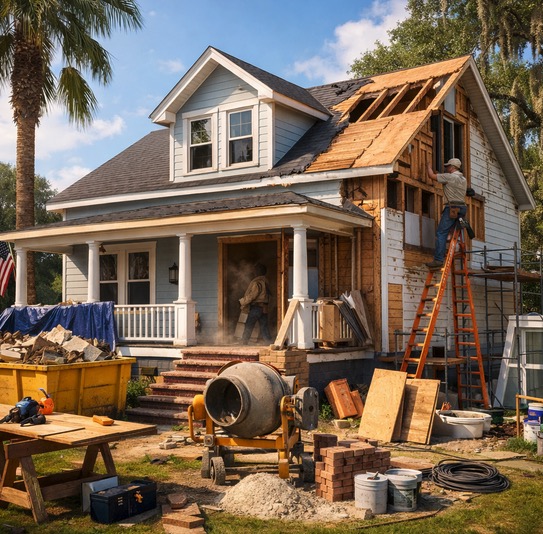
Pros and Cons in Today’s Market
Many homeowners are experiencing serious sticker shock in today’s record-high home price market. With interest rates, low inventory, and rising construction costs, it’s no surprise buyers are looking for alternatives. One option that often seems appealing is buying fixer upper homes with lower price tags.
You may be thinking, “I’m handy. I can do most of the work myself. I watch HGTV—I’ve got this!” But remember those HGTV episodes where they can’t remove a wall because it’s structural, or the budget explodes due to hidden issues? In real life, you should be prepared to multiply those surprises by ten when buying fixer upper properties.
Let’s break down the pros and cons of buying fixer upper homes in today’s market—so you can decide if it’s truly the right move for you.
Pros of Buying Fixer Upper Homes
1. Lower Purchase Price
One of the biggest advantages of buying fixer upper homes is affordability. These properties often come with lower list prices, helping buyers enter competitive markets where move-in-ready homes may be out of reach.
2. Pride of Ownership
There’s something incredibly rewarding about transforming a home with your own vision. From selecting finishes to reimagining layouts, fixer uppers allow buyers to create a space that truly feels like home.
3. Potential to Save Money (Long-Term)
If renovations are planned carefully and executed correctly, buying fixer upper properties can build equity faster than purchasing a fully renovated home—especially in appreciating markets.
4. Less Buyer Competition
Many buyers shy away from homes that need work. That means fewer bidding wars and more negotiating power for buyers willing to take on a project.
Cons of Buying Fixer Upper Homes
1. Expecting the Unexpected
Hidden issues—structural problems, outdated wiring, plumbing failures, or foundation concerns—can quickly derail budgets. When buying fixer upper homes, unexpected costs are not the exception—they’re the norm.
2. Financing Challenges
Not all homes qualify for traditional financing. If a property’s condition doesn’t “match the money,” lenders may require repairs before closing or deny financing altogether. This is a critical consideration when buying fixer upper homes with loans.
3. Cash Buyers: Be Careful
Paying cash can feel like a win—but if all your savings go toward the purchase, what’s left for repairs? Buying fixer upper homes still requires renovation capital, and running out of funds mid-project can leave you stuck.
4. Time, Stress, and Decision Fatigue
Renovations take time—often much longer than expected. Buyers must honestly assess what they can handle emotionally, physically, and financially before committing.
Paying the Right Price Matters
One of the biggest mistakes buyers make when buying fixer upper homes is overpaying. The purchase price plus renovation costs should still align with the home’s after-repair value. Paying too much upfront can erase any financial advantage.
Two Common Questions Buyers Ask
Q1: Can I qualify for a loan on a fixer upper?
Yes—but it depends on the home’s condition and the loan type. Some properties won’t qualify for traditional financing without repairs. Specialized renovation loans may be required.
Q2: Is buying a fixer upper worth it in today’s market?
It can be—but only with proper planning, realistic budgeting, and professional guidance. Buying fixer upper homes isn’t about saving money upfront—it’s about making smart, informed decisions.
Buying a fixer upper can be an opportunity—or a financial headache. Success depends on knowing your limits, planning for surprises, and understanding financing options. With the right strategy, buying fixer upper homes can still be a powerful path to homeownership—even in today’s market.
Thinking about buying fixer upper homes in South Carolina? Let the RMF Realty Team help you evaluate the numbers, financing options, and renovation risks before you commit.
📲 Contact us today for a fixer-upper consultation and smart buying strategy.