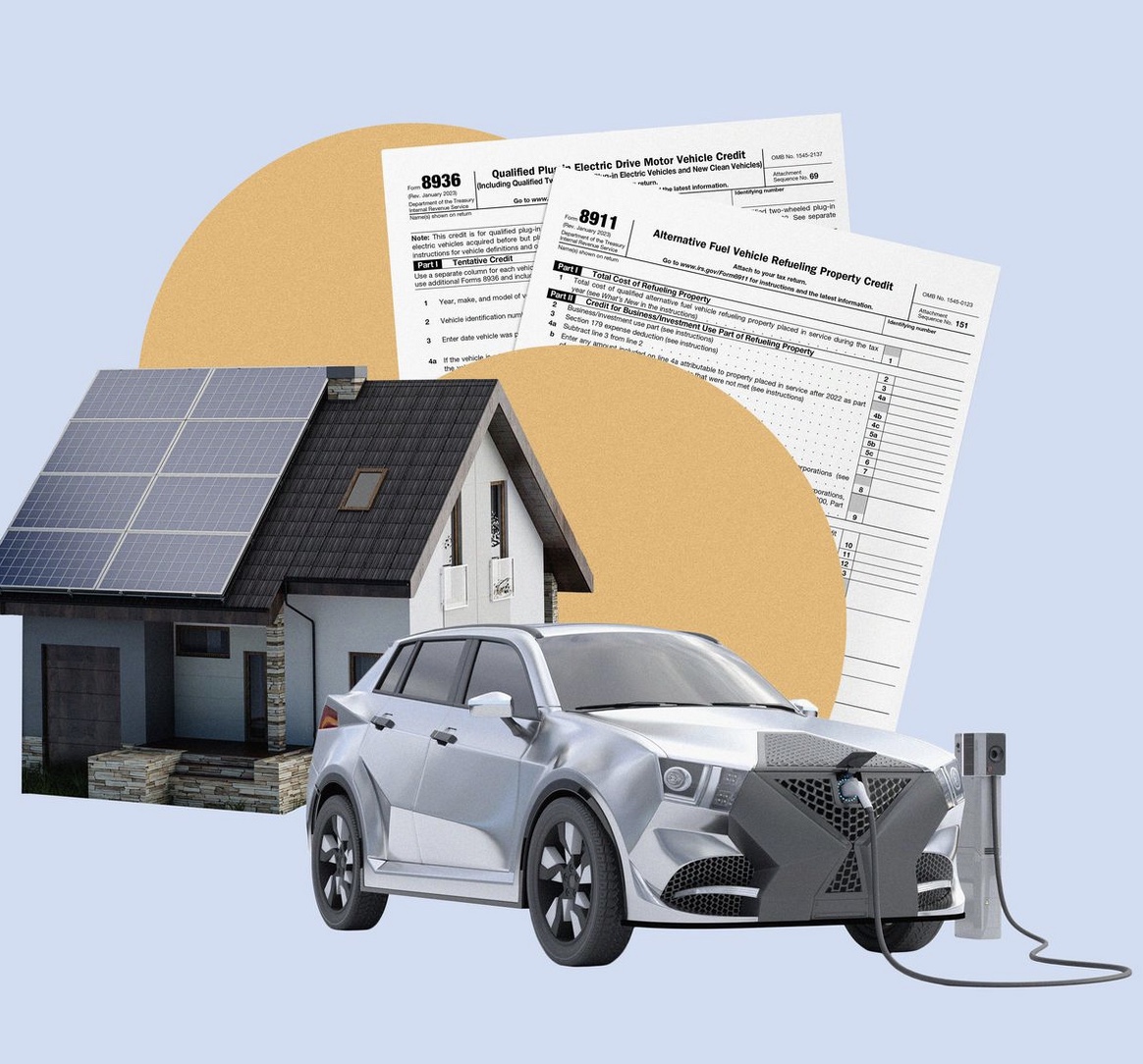
Maximizing Tax Benefits for Homeowners: Deductions and Credits to Know

Owning a home is a significant financial investment, and as a homeowner, you may be looking for ways to reduce your tax bill. One way to do this is by taking advantage of tax credits available to homeowners. In this article, we will discuss tax credits for homeowners and how they can be used to save you money.
Firstly, it is essential to understand the difference between a tax credit and a tax deduction. A tax deduction reduces your taxable income, while a tax credit reduces the amount of tax you owe. For example, if you have a $1,000 tax credit, and you owe $5,000 in taxes, your tax bill will be reduced to $4,000.
There are several tax credits available to homeowners, and the most common ones are related to energy-efficient upgrades. One such credit is the Residential Energy Efficient Property Credit, which is available to homeowners who install energy-efficient solar panels, wind turbines, geothermal heat pumps, and fuel cells. The credit is worth 26% of the cost of the equipment and installation, up to a maximum of $5,000.
Another tax credit available to homeowners is the Nonbusiness Energy Property Credit. This credit is available to homeowners who make energy-efficient upgrades to their homes, such as installing insulation, energy-efficient windows, or upgrading to an energy-efficient HVAC system. The credit is worth 10% of the cost of the upgrades, up to a maximum of $500.
In addition to energy-efficient upgrades, there are also tax credits available for homeowners who make improvements to their homes to make them more accessible for people with disabilities. The Disabled Access Credit is available to homeowners who make modifications to their homes to accommodate a disabled person, such as adding wheelchair ramps or widening doorways. The credit is worth 50% of the cost of the modifications, up to a maximum of $5,000.
It is important to note that not all tax credits are available every year, and some may be subject to phase-out limits based on your income. It is also essential to keep accurate records of any improvements or upgrades you make to your home to claim these credits.
In conclusion, tax credits for homeowners can be a valuable tool for reducing your tax bill while making energy-efficient or accessibility upgrades to your home. By taking advantage of these credits, you can save money while also investing in your home’s value and sustainability. Remember to consult a tax professional or financial advisor for guidance on how to take advantage of these credits and any other tax-saving strategies.
#Taxcredits, #Homewners, #Energyefficient, #Solar,#Disableaccesscredit,
Standard vs. Itemized Tax Deductions:
In addition to tax credits, homeowners may also be able to reduce their tax bill through deductions. Two common types of deductions available to homeowners are standard deductions and itemized deductions.
The standard deduction is a fixed amount that you can deduct from your taxable income without having to itemize your deductions. The amount of the standard deduction varies depending on your filing status and changes each year. For example, in 2021, the standard deduction for a married couple filing jointly is $25,100.
Itemized deductions, on the other hand, allow you to deduct specific expenses related to homeownership, such as mortgage interest, property taxes, and home office expenses. To claim itemized deductions, you must keep accurate records of these expenses and file Form 1040 Schedule A with your tax return.
The decision to take the standard deduction or itemize your deductions depends on which option will result in the greatest tax savings. If your itemized deductions exceed the standard deduction, it may be beneficial to itemize. However, if your itemized deductions are less than the standard deduction, it may be more beneficial to take the standard deduction.
It is important to note that the Tax Cuts and Jobs Act of 2017 (TCJA) made significant changes to the tax code, including increasing the standard deduction and placing limits on itemized deductions. Under the TCJA, the state and local tax (SALT) deduction, which includes property taxes, is capped at $10,000. This may impact homeowners in high-tax states who rely on the SALT deduction to reduce their tax bill.
In conclusion, homeowners have several options for reducing their tax bill, including tax credits, standard deductions, and itemized deductions. By understanding these options and consulting with a tax professional, homeowners can take advantage of the tax benefits available to them and potentially save money on their taxes.
7 Tax Deductions for Homeowners:
As a homeowner, there are several tax deductions you may be eligible for. Here are seven deductions to consider:
Mortgage Interest Deduction: Homeowners can deduct the interest paid on their mortgage, up to a limit of $750,000 of the mortgage principal. This deduction applies to both primary and secondary homes.
Property Tax Deduction: Homeowners can also deduct property taxes paid on their primary and secondary homes, up to a limit of $10,000 per year.
Home Office Deduction: If you use part of your home exclusively for business purposes, you may be able to deduct expenses related to that portion of your home, including utilities, repairs, and insurance.
Energy-Efficient Home Improvements Deduction: As mentioned earlier, homeowners who make energy-efficient upgrades to their homes, such as installing insulation, energy-efficient windows, or upgrading to an energy-efficient HVAC system, can deduct up to $500 of the cost of the upgrades.
- Moving Expenses Deduction: If you move because of a change in your job location or start a new job, you may be able to deduct certain moving expenses.
- Home Equity Loan Interest Deduction: Homeowners may deduct the interest paid on a home equity loan or line of credit used to make improvements to their home, up to a limit of $100,000.
- Casualty Loss Deduction: If your home is damaged or destroyed due to a natural disaster, you may be able to deduct the loss not covered by insurance.
Keep in mind that eligibility for these deductions may vary based on your income, the size of your mortgage, and other factors. It is always recommended to consult with a tax professional to ensure you are taking advantage of all available deductions and credits.
What to know about home improvements and tax deductions:
Homeowners who make certain home improvements may also be eligible for tax deductions. Here’s what you should know about home improvements and tax deductions:
Energy-Efficient Home Improvements: Homeowners who make energy-efficient upgrades to their homes, such as installing insulation, energy-efficient windows, or upgrading to an energy-efficient HVAC system, may be eligible for a tax credit of up to 10% of the cost of the improvements, up to a maximum credit of $500.
Medical Home Improvements: If you make home improvements to accommodate a medical condition, such as adding a wheelchair ramp or installing a stairlift, you may be able to deduct the cost of the improvements as a medical expense on your tax return.
Home Office Improvements: If you use part of your home exclusively for business purposes, you may be able to deduct expenses related to the portion of your home used for business, including home office improvements.
It’s important to note that not all home improvements are eligible for tax deductions. Cosmetic improvements, such as painting and landscaping, are not tax-deductible. Additionally, the Tax Cuts and Jobs Act of 2017 eliminated the deduction for home equity loan interest for non-home improvement purposes.
When making home improvements, it’s important to keep detailed records of the costs of the improvements, including materials and labor. This information will be necessary when claiming any tax deductions or credits related to the improvements.
As always, it’s recommended to consult with a tax professional to ensure you are taking advantage of all available tax deductions and credits related to your home improvements.
#Homeimprovementtaxcredit, #Taxcuts, #medicalHomeImprovements, #Emergyefficenttaxxredit,
3 Tax Credits for Home Owners:
When it comes to tax credits for homeowners, there are a few that really stand out. Here are three tax credits that you should definitely be aware of if you own a home:
Energy Efficient Home Improvement Credit: Homeowners who make certain energy-efficient improvements to their homes, such as installing insulation, energy-efficient windows, or upgrading to an energy-efficient HVAC system, may be eligible for a tax credit of up to $500. This credit can be especially valuable since it directly reduces your tax liability, rather than just reducing your taxable income.
Residential Clean Energy Property Credit: If you’ve installed solar panels, wind turbines, or geothermal heat pumps in your home, you may be eligible for a tax credit of up to 26% of the cost of the installation. This credit applies to both primary and secondary homes, and can be a great way to offset the cost of renewable energy installations.
First-Time Homebuyer Tax Credit: While this credit is no longer available for most homebuyers, it is still available for some members of the military, as well as certain federal employees and retirees. The credit can be worth up to $8,000 and applies to homes purchased between April 9, 2008, and May 1, 2010. If you fall into one of these categories and are considering buying a home, this credit could provide a valuable financial incentive.
It’s important to note that tax credits have different requirements and limitations, so it’s always recommended to consult with a tax professional to ensure that you’re eligible and taking advantage of all available tax credits related to homeownership. But if you’re a homeowner looking to save money on your taxes, these three tax credits are definitely worth considering.
#taxbenefits, #homeownership, #taxdeductions, #taxcredits, #energyefficiency, #sustainableliving, #firsttimehomebuyer,